

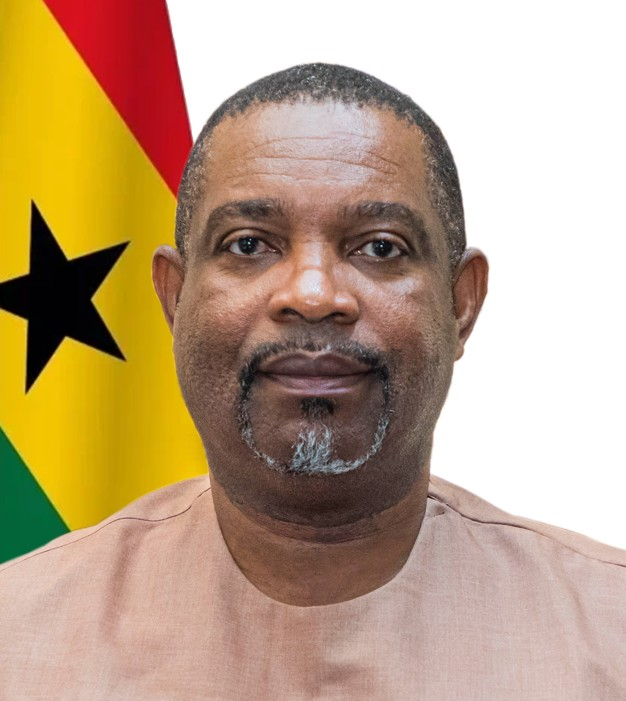
The Director-General of the National Council for Curriculum and Assessment (NaCCA), Prof. Samuel Ofori Obuobisah Bekoe, has issued a public apology following widespread criticism over controversial references to gender identity in a Senior High School teacher manual.
Speaking to the media, Prof. Bekoe said NaCCA did not hesitate to apologise to Ghanaians once it became clear that portions of the Year Two Physical Education and Health (Elective) Teacher Manual were inconsistent with the country’s cultural values.
“When you take over a place of liability, on that note, I have no difficulty, on behalf of the organisation, apologising to the public for whatever transpired,” he said. “We are also taking strong measures to ensure that these things do not occur again.”
The apology comes after NaCCA withdrew printed copies of the manual—documents that had been approved, funded by the state, and already distributed to schools nationwide. Developed in 2024, the manual was intended to provide additional guidance to teachers implementing the new SHS curriculum introduced last academic year.
Public outrage erupted after sections discussing “gender identity” surfaced, sparking intense debate and demands for accountability.
Prof. Bekoe explained that NaCCA was still assessing the level of exposure, noting that the course is elective and therefore taken by relatively few students.
“We don’t want to just assume, so we will send officers to the field to find out,” he said. “Because it’s an elective course and not many students take it, it is easier to determine the extent of use.”
He further indicated that the controversial content may not have been uniformly taught, depending on how individual teachers approached the manual.
“Those who have that kind of perception may teach alongside it, but those who are against it, even though it is in the guidance, will not use it,” he explained.
Prof. Bekoe reiterated his apology, while dismissing suggestions that the oversight resulted from negligence.
He clarified that although the material passed through standard review processes, it was only flagged after public scrutiny.
“It escaped the system until attention was drawn to it,” he admitted. “We have dealt with it, and we are assuring the Ghanaian public that it’s not going to happen ever again.”
NaCCA has since released a revised edition of the manual, stating that the new version aligns fully with Ghana’s cultural values and reflects a strictly biological understanding of gender.
