

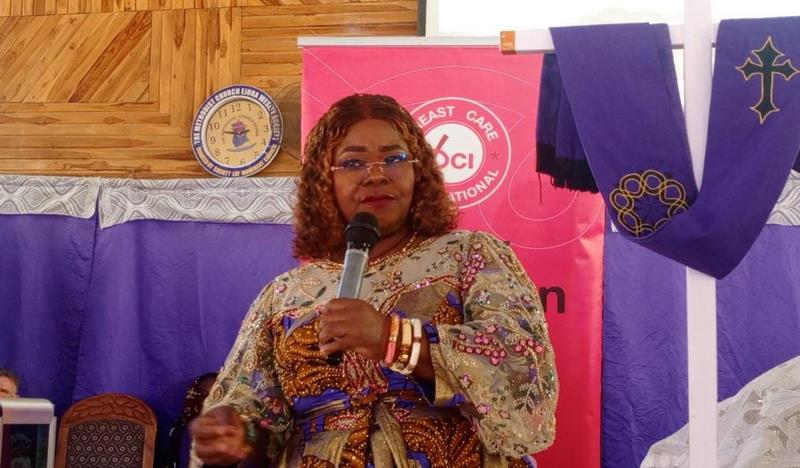
The Founder of Breast Care International (BCI) and Chief Executive Officer of Peace and Love Hospitals, Dr. Mrs. Beatrice Wiafe Addai, has called for an urgent nationwide ban on shisha smoking in Ghana, citing its dangerous health implications, particularly among young women.
According to Dr. Wiafe Addai, shisha smoking is contributing significantly to the increasing number of breast cancer cases among women aged between 28 and 40.
She disclosed that Ghana records approximately 5,000 new breast cancer cases annually, with about 2,360 deaths each year, describing the figures as alarming and requiring immediate action.
She made these remarks during a breast cancer awareness and free clinical screening exercise organized for members of the Methodist Church Ghana at Ejura in the Ashanti Region.
The event formed part of BCI’s ongoing community outreach programme aimed at educating the public on the signs and symptoms of breast cancer, promoting early detection, and offering free clinical breast examinations.
Dr. Wiafe Addai expressed deep concern over the growing trend of shisha smoking among young women.
She noted that while smoking was previously more common among men, more women are now adopting the habit, putting themselves at serious risk.
She warned that women who smoke shisha are not only at higher risk of developing breast cancer but are also vulnerable to other non-communicable diseases.
As Chairperson of the Ghana Non-Communicable Disease Alliance (GhNCDA), she urged government authorities to prioritize the fight against shisha smoking.
“If the youth are our future and young women are getting into shisha, which research shows one puff of shisha is equivalent to smoking 10 sticks of cigarettes, and authorities aren’t taking action, it means we’re basically setting them up to fail,” she stressed.
She further appealed to the government to take decisive action by banning shisha smoking, referencing Uganda’s prohibition as an example Ghana could follow.
Beyond shisha use, Dr. Wiafe Addai highlighted other lifestyle factors that increase the risk of breast cancer, including skin bleaching, frequent consumption of fast foods, and excessive intake of alcoholic beverages—particularly bitters.
She also reminded the public that breast cancer is not limited to women, noting that men can also develop the disease, and advised male smokers to be cautious.
Additionally, she called on the government to equip all regional hospitals across the country with mammography machines to enhance early diagnosis and treatment.
Currently, she indicated, such machines are largely concentrated in the Ashanti and Greater Accra Regions, leaving many Ghanaians without access to essential screening services.
This limited access, she explained, often leads to delayed diagnosis and restricted treatment options, contributing to the country’s high breast cancer mortality rate.
Meanwhile, beneficiaries of the screening programme expressed gratitude to Breast Care International for its life-saving outreach initiatives.
Many credited the organisation’s efforts with improving early detection, reducing the severity of treatment, and increasing survival rates within their communities.
